By Septem Event Services | Perfume Bar Set Up · Fragrance Station Design · Egypt
Quick Summary — Perfume Bar Set Up
Element What It Needs ✅ Table & Layout Height-tiered display, enough space per guest station ✅ Bottles & Vessels Apothecary-style glass, consistent sizing, branded labels ✅ Signage Clear instructions, scent family labels, event branding ✅ Lighting & Backdrop Warm lighting, photo-friendly backdrop for content ✅ Staffing 1 consultant per 50–80 guests for smooth flow
If you’ve searched “perfume bar set up,” you’re probably picturing it already — rows of elegant bottles, a beautifully styled table, guests leaning in to smell different scents before choosing their own. That image is exactly right. The question is how to actually build it.
This guide walks through what a proper perfume bar set up requires — from the physical layout to the staffing that makes it run smoothly — whether you’re planning it yourself for a small gathering or arranging one through a professional service for a wedding or corporate event.
Want it professionally set up for your event? Talk to the Septem team →

The Core Elements of a Perfume Bar Set Up
A well-designed setup isn’t just a table with bottles on it. It’s a small, deliberate environment — and every element serves a purpose.
1. The Table Layout
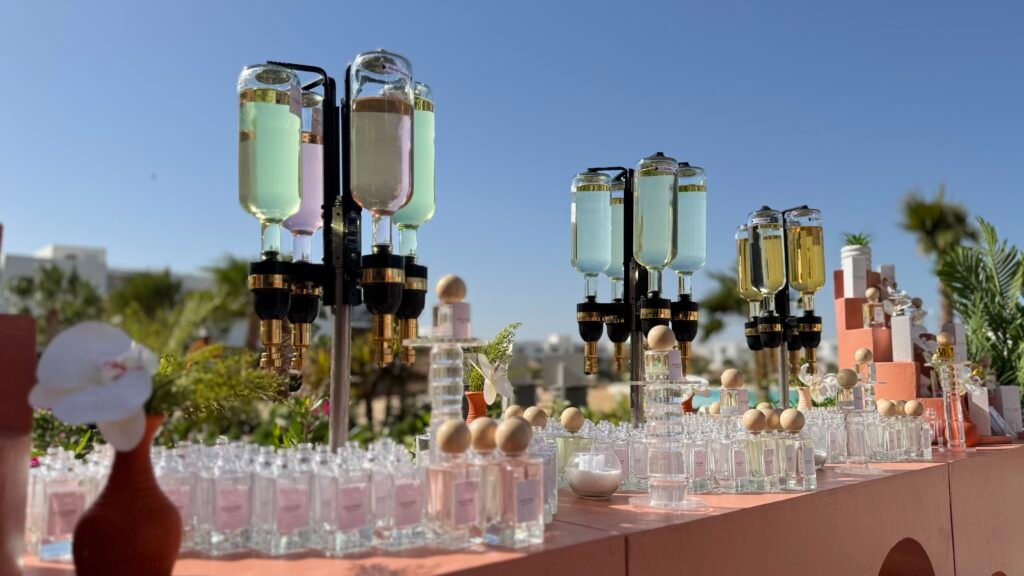
The table itself should be tiered, not flat. Using risers, small crates, or staggered platforms creates visual depth and lets guests see the full fragrance selection at a glance instead of hunting through a flat row of identical bottles.
Leave enough space between stations that two or three guests can browse comfortably without bumping elbows — cramped setups create bottlenecks, especially at larger events.
2. Bottles and Vessels
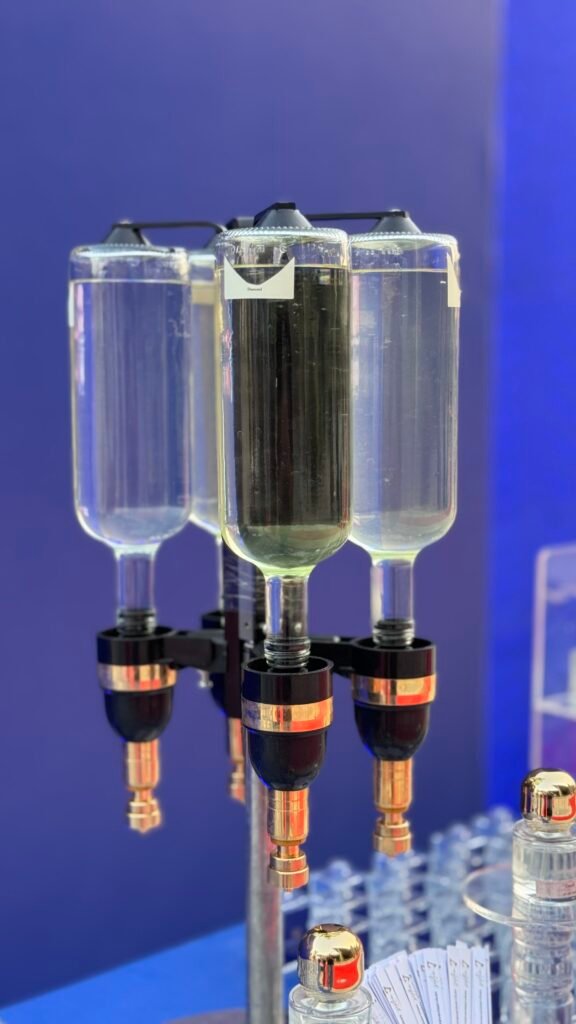
Consistency matters more than variety here. Matching bottle shapes and sizes for the fragrance oils being sampled give the whole display a coordinated, intentional look. Apothecary-style glass bottles with simple labels tend to photograph better than anything overly ornate — the goal is elegant, not cluttered.
If guests are taking home a personalized bottle, that’s a separate, branded vessel — distinct from the sampling bottles on display.
3. Signage and Labeling
Every scent needs a clear label — not just a name, but a brief description of its fragrance family (floral, woody, oriental, fresh) so guests can navigate without needing to smell every single option.
For branded events, this is also where your event name, couple’s names, or company logo appears — on a small standing sign rather than anything that clutters the table itself.
4. Lighting and Backdrop
This is the detail most DIY setups miss, and it’s the one that determines whether the station photographs well. Warm, soft lighting (string lights, small lamps, or repositioned ambient lighting) makes bottles glow rather than looking flat under harsh venue lighting.
A simple backdrop — a floral arrangement, a fabric drape, or a branded step-and-repeat — turns the station into a natural photo spot, which matters because guests will photograph it whether you plan for that or not.
5. The Blending or Filling Station
If the experience includes guests creating a custom blend (rather than just choosing a pre-made scent), you need a separate work surface — funnels, small measuring tools, and a clean area where the actual mixing happens, kept visually distinct from the display table.
6. Staffing
This is the element every guide skips, and it’s the one that determines whether the whole setup actually works on the day. One trained consultant can typically manage 50 to 80 guests smoothly for a simple selection-and-fill format. Interactive blending formats need a lower ratio — closer to one consultant per 30–40 guests — because each interaction takes longer.
Without enough staff, even the most beautifully designed table turns into a slow-moving line, which undermines the entire experience.
DIY vs. Professional Set Up: What’s the Real Difference?
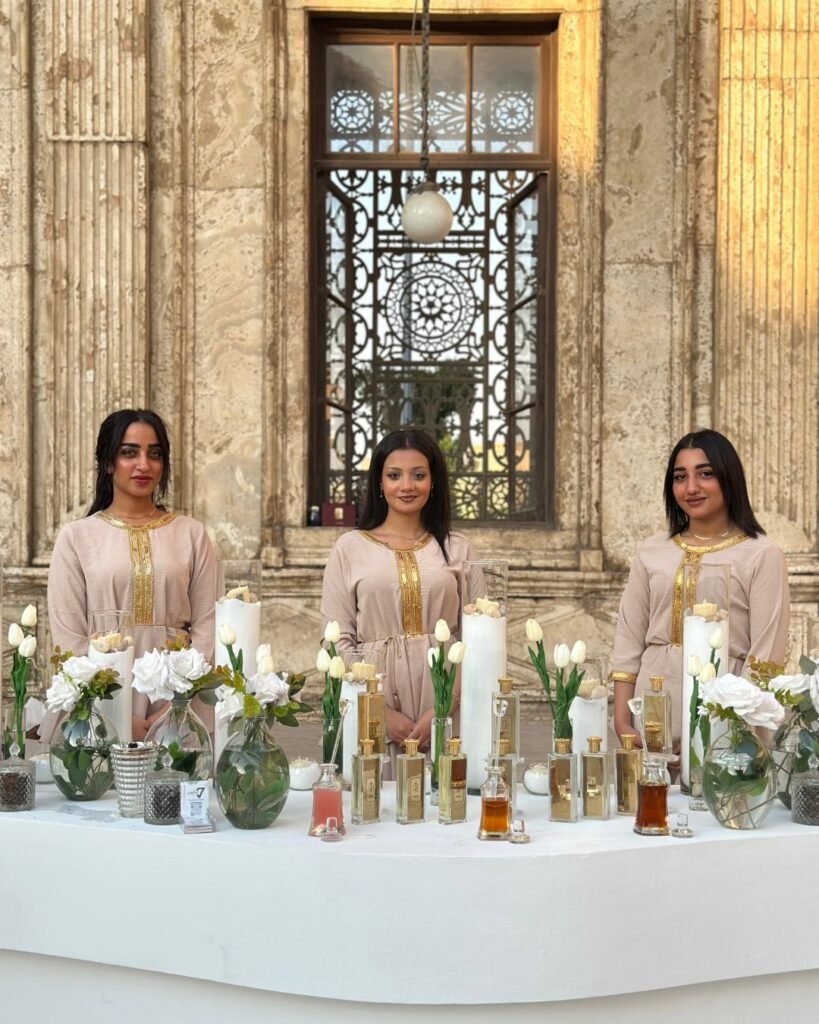
A DIY version works fine for a small home gathering — a bridal shower with 15 guests, a birthday party for close friends. At that scale, you control the pace, and a beautiful table with a few fragrance oils genuinely delivers the experience people expect.
The complexity increases fast once guest count grows. At 100+ guests, the details that seemed optional — staffing ratio, bottle logistics, refill planning, queue management — become the difference between an elegant experience and a bottleneck that frustrates guests standing in line.
What tends to break down in DIY setups at scale:
- Running out of a popular scent mid-event with no backup supply
- One person managing both fragrance guidance and bottle filling, creating a slow queue
- No plan for guests who want to blend rather than select a single scent
- Table design that looks great in the first hour and messy by the third
This is where the setup shifts from a fun personal project into something that benefits from professional execution — not because DIY can’t look good, but because the operational side is harder to manage than the visual side.
Set Up by Event Type
Weddings — Larger scale, needs a Dual-Consultant System for events over 150 guests (one specialist for scent discovery, one for filling), positioned near the reception flow so it doesn’t compete with the main buffet for attention.
Corporate events — Set up needs to align with brand colors and messaging; the table itself becomes a small branded moment, not just a fragrance station. See our corporate scent bar guide for the branding-specific details.
Bridal showers & engagement parties — Smaller, more intimate setups (20–60 guests) where the DIY aesthetic actually works well, but staffing still matters if the group is larger than 30.
Birthday parties — More playful theming is appropriate here — zodiac-based scent pairings, mystery blending games — with a table design that leans colorful rather than minimalist.
Common Mistakes to Avoid

Flat, single-level table display — Without tiered height, the table reads as cluttered rather than curated, no matter how nice the individual bottles are.
Understaffing for the guest count — The single biggest cause of long queues and a rushed guest experience.
No backup fragrance stock — Popular scents run out faster than expected; having none in reserve creates disappointed guests mid-event.
Harsh venue lighting with no adjustment — Overhead event lighting rarely flatters a fragrance display; a small lighting adjustment makes a disproportionate difference.
Skipping the photo consideration entirely — Guests will photograph the station regardless of planning; not designing for that misses free, organic content.
How Septem Handles the Full Setup
For events beyond the scale of a simple home gathering, Septem manages the full set up — table design, fragrance sourcing, branded bottles, staffing, and the styling details that make the station photograph well.
What’s included:
- Custom table design matched to your event’s color palette and theme
- Full fragrance selection across floral, oriental, woody, and fresh families
- Trained consultants scaled to your guest count
- Branded bottles, labels, and signage for weddings or corporate identity
- Lighting and backdrop styling for the photo-ready result guests expect
- Ongoing restocking throughout the event — no mid-event shortages
This is delivered as part of our Perfume Bar for Events service, often paired with Arabic hospitality or a candy corner for a fuller sensory experience — covering everything from an intimate 30-guest gathering to a 600-guest wedding or gala, across Cairo, Sheikh Zayed, the New Administrative Capital, and beyond.

Frequently Asked Questions
How much space does a perfume bar set up need? A standard table setup for 6–10 fragrance options needs roughly 2–3 meters of table length, plus clear space in front for guests to browse without crowding.
How many fragrance options should be on display? Between 6 and 10 tends to be the sweet spot — enough variety to feel curated, without overwhelming guests with too many choices to compare.
Can a perfume bar set up work for a small home gathering? Yes, DIY setups work well for smaller groups (under 30 guests) where you control the pace and don’t need dedicated staffing.
What’s the biggest mistake in DIY perfume bar set ups? Understaffing relative to guest count. Even a beautifully designed table creates a frustrating experience if there’s no one managing flow and refills.
How far in advance should the set up be planned? For professionally managed events, 2–3 weeks is typically enough to finalize fragrance selection, bottle branding, and staffing logistics.
Is a perfume bar set up different for corporate events versus weddings? Yes — corporate setups prioritize brand alignment (colors, logo, signature scent development), while wedding setups typically prioritize romantic aesthetics and guest favor quality.
Bringing It Together
A great perfume bar set up comes down to six things done well: tiered layout, coordinated bottles, clear signage, warm lighting, a dedicated blending area if needed, and — most overlooked — enough staff to keep the experience smooth.
Get those right, and the station becomes exactly what people picture when they search for it: elegant, photogenic, and genuinely enjoyable for guests to experience.
Want yours designed and managed professionally?
👉 Explore Our Perfume Bar Service 💬 Contact Us on WhatsApp 📞 +20 111 106 1771 | ✉️ info@septem-events.com
Septem Event Services — Sheikh Zayed, 10th District, First Neighborhood, Building 35, Ground Floor — Giza, Egypt 12588 Instagram · Facebook · TikTok